Is Home Still the Right Place? A Family Guide to Evaluating Safety, Independence & Quality of Life
Most older adults hope to remain in their own home for as long as possible, and many can.
The question isn't simply whether your loved one can stay home. The better question is whether home continues to provide the safety, independence, and quality of life they deserve.
This guide will help families recognize the subtle changes that often happen gradually, understand practical ways to improve safety at home, and know when it may be time to explore additional support. Whether that means aging in place, bringing services into the home, or eventually considering assisted living communities in Reno and Sparks, our goal is to help families make informed decisions with confidence—before a crisis occurs.
"Mom has told us for years that she wants to stay in her own home forever."
If you've had this conversation with a parent, you're not alone. In fact, it's one of the most common things I hear from families. And honestly, I understand. Home represents so much more than a house. It's where memories were made, holidays were celebrated, children were raised, and life was lived. Leaving home can feel like giving up independence, control, and a part of your identity.
The good news is that many older adults can remain safely at home for years with the right planning, support, and resources.
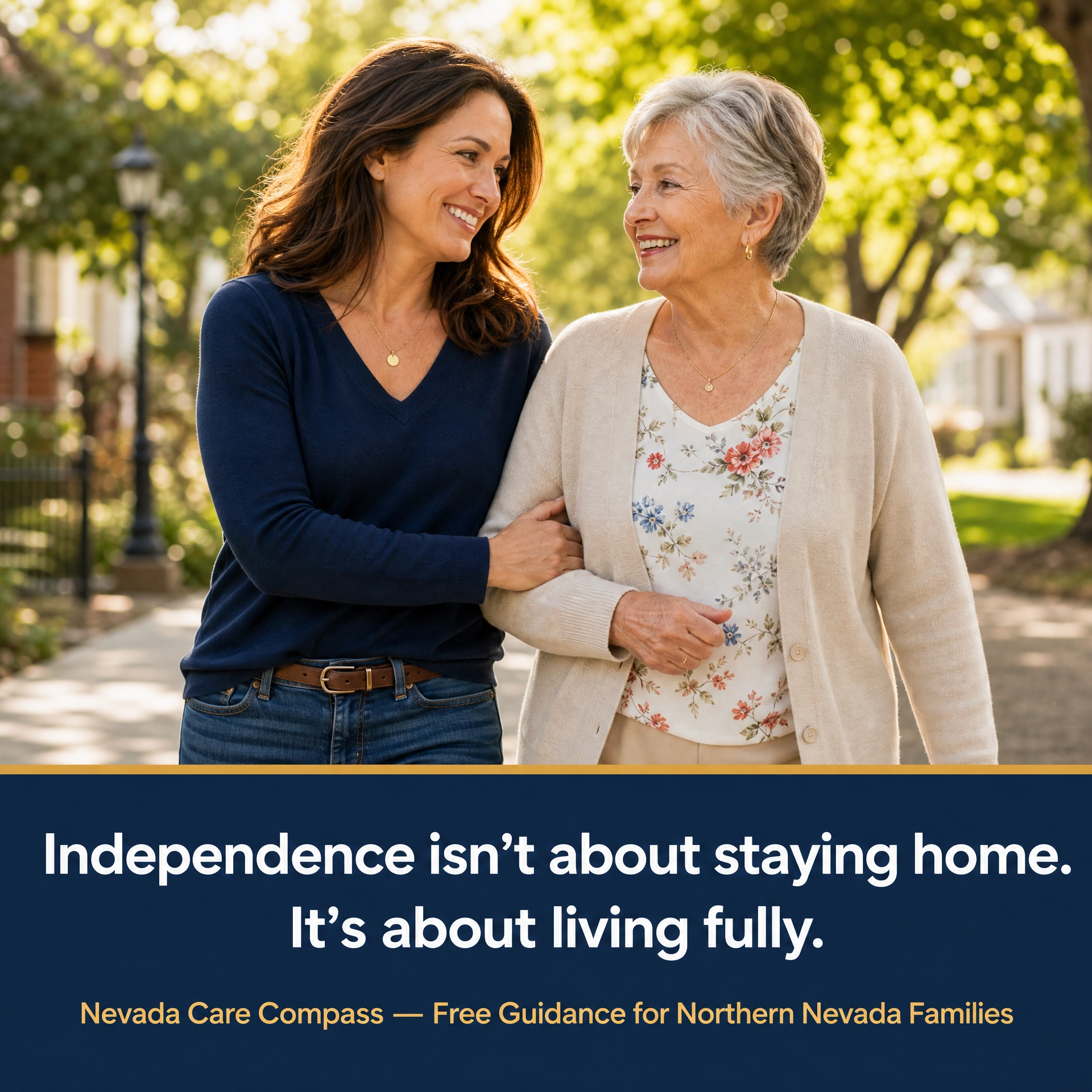
"The goal isn't simply to stay home. The goal is to live safely, independently, and with the highest possible quality of life."
The challenge is that changes rarely happen overnight. Instead, they happen gradually:
- A missed medication.
- A small fall that wasn't mentioned.
- Bills left unpaid.
- A refrigerator with spoiled food.
- A forgotten doctor's appointment.
Each event seems small on its own. Families naturally explain them away. "She's just getting older." "He's always been forgetful." "She's just tired." "Dad has always been stubborn." Before long, everyone has quietly adjusted to these new routines without realizing how much has changed.
That's why the most important question isn't: "Is it time for assisted living?" The better question is: "Is home still the safest place for my loved one today?"
Asking that question early doesn't take away independence. In many cases, it helps preserve it longer.
Home Isn't the Goal—Safety Is
One of the biggest misconceptions families have is believing there are only two choices: stay home, or move to assisted living.
In reality, there are many steps in between. Sometimes a few grab bars and better lighting are enough. Sometimes medication reminders make all the difference. Sometimes bringing in a caregiver for a few hours each week allows someone to remain at home comfortably for years.
Other times, increasing needs eventually make another living arrangement the safer choice. The key is making those decisions thoughtfully—not during a crisis.
At Nevada Care Compass, we encourage families to look beyond the house itself and instead evaluate whether the home is continuing to support a person's independence, health, and well-being.
"Family Guide" PDF DOWNLOAD HERE
Why It's So Hard to Recognize When Things Have Changed
One of the most common things I hear families say is: "We didn't realize how much had changed until we looked back."
That isn't because families don't care. It's because aging rarely happens all at once. Most changes happen so gradually that everyone adapts without realizing it. Mom starts asking you to pick up a few groceries because she's "already home." No big deal. A few months later, you're managing her medications because "the bottles are confusing." Then you're scheduling doctor's appointments because she's forgotten a couple. Eventually, you're stopping by after work to help with the laundry, taking over the bills, and driving her to appointments.
None of these changes felt significant by themselves. Each one made perfect sense. Each one had a reasonable explanation. And before long, you've quietly taken over many of the things she used to do independently.
Families Become Part of the New Routine
This is something almost every caregiver experiences. Without even realizing it, families begin filling in the gaps. You remind Dad to take his medication. You call to make sure Mom ate lunch. You mow the lawn. You organize the pill box. You pay the bills online. You clean out the refrigerator. You stop bringing up driving because it always turns into an argument.
These acts of love become part of your weekly routine. The challenge is that once the family is doing these things, it's harder to recognize what would happen if no one stepped in.
Questions to Ask Yourself: "If I wasn't here helping, could my loved one safely manage this on their own?" That question often provides a clearer picture than simply asking, "How are they doing?"
Independence Doesn't Always Look the Same
Many people assume independence means doing everything without help. In reality, independence looks different for everyone. Some older adults thrive with a little extra support, such as a grocery delivery service, medication reminders, transportation to appointments, a few hours of home care each week, or simple home modifications.
These resources don't take away independence. Often, they help preserve it. The goal isn't to avoid accepting help. The goal is to make sure the right support is in place before a crisis forces difficult decisions.
Instead of asking, "Can Mom still live at home?" try asking:
- Is she safe?
- Is she eating well?
- Is she taking medications correctly?
- Is the house being maintained?
- Is she socially connected?
- Is she enjoying life?
- Am I doing more every month than I was a year ago?
Those questions often reveal changes that are easy to miss when looking at the bigger picture.
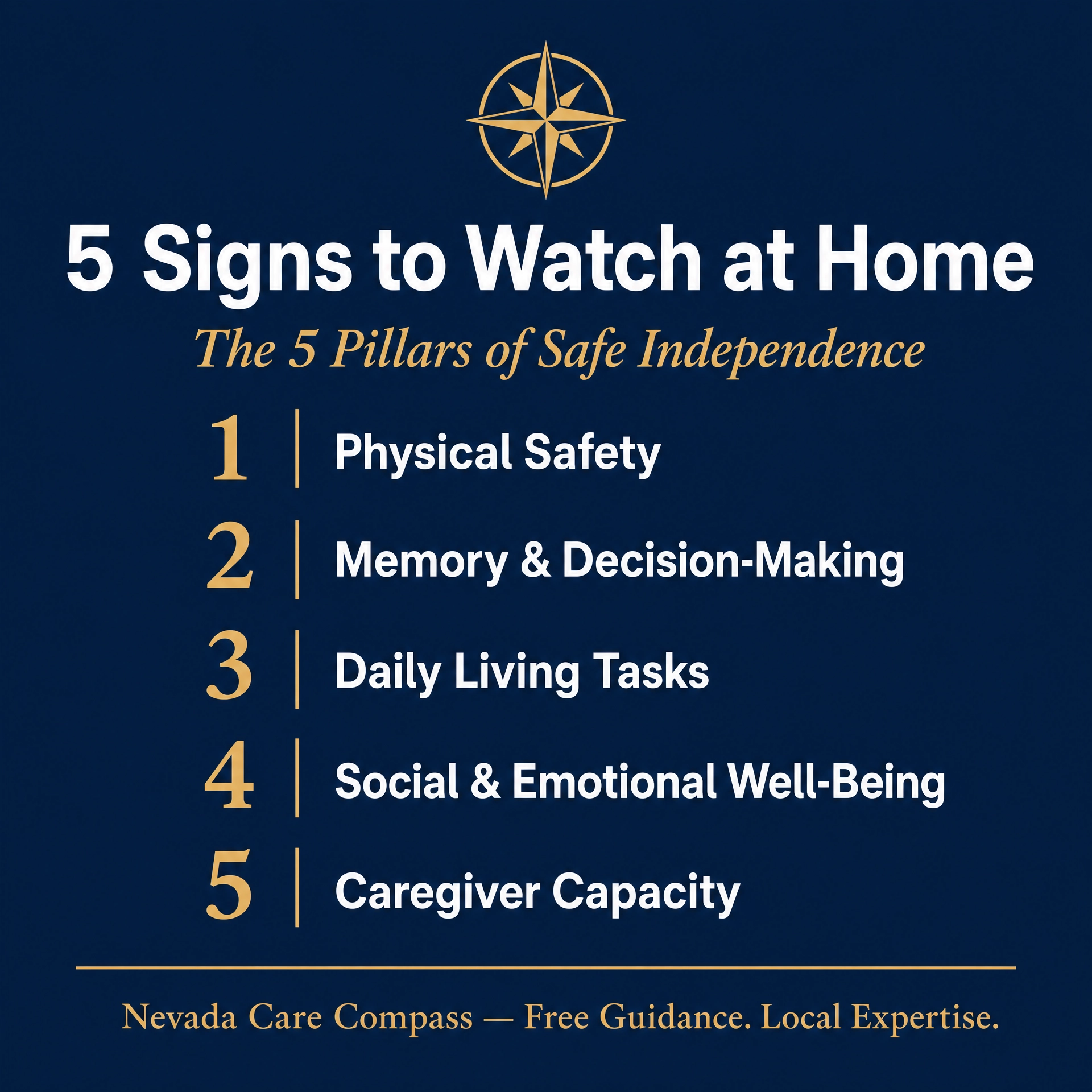
The Five Pillars of Safe Independence
When families ask me if their loved one is still safe living at home, I don't look for one single warning sign. Instead, I look at the whole picture. Someone may occasionally forget where they left their keys and still live independently for many years. Another person may have no memory concerns but struggle with balance, nutrition, medication management, or social isolation.
Safety isn't determined by one event. It's determined by whether a person can continue meeting the everyday demands of life while maintaining their health, dignity, and independence. One of the easiest ways to understand that bigger picture is to look at five key areas of daily living.
1. Physical Safety: Can Home Still Support Daily Life?
When most people think about home safety, they picture grab bars in the bathroom or a walker in the hallway. Those things are important. But physical safety is about much more than preventing falls. It's about asking whether the home still supports the way your loved one lives today—not the way they lived five or ten years ago.
As we age, our bodies naturally change. Balance may not be as steady. Vision can decline. Arthritis can make everyday tasks more difficult. Recovering from even a minor illness or injury often takes longer. The home hasn't changed. But the person living in it has. A home that was once comfortable and familiar can slowly become more difficult—and sometimes more dangerous—to navigate.
Instead of asking whether your loved one is "doing okay," imagine walking through their home one room at a time:
- The Front Door: Can they safely get in and out of the house? Are there steps without sturdy handrails?
- The Living Room: Does the room allow them to move safely? Look for throw rugs that slide easily or poor lighting.
- The Kitchen: Is there fresh food in the refrigerator? Have there been burnt pans on the stove?
- The Bathroom: Can your loved one step into the shower safely and dry off without losing their balance?
- The Bedroom: Can they safely get out of bed in the middle of the night? Is there a clear, well-lit path to the bathroom?
It's Not Just About Falls
Sometimes families tell me, "Mom hasn't fallen." That's wonderful. But I often ask another question: Has she stopped doing things because she's afraid she might fall? Many older adults quietly change their lives to avoid situations that no longer feel safe. They stop gardening. They avoid stairs. They quit attending church. They no longer drive after dark. Those aren't just lifestyle changes—they're often early indicators that independence is beginning to change.
2. Memory & Decision-Making: Looking Beyond Forgetfulness
Almost everyone forgets things occasionally. We misplace our keys or forget an appointment. That's why it's important not to panic over one forgotten event. Instead, look for patterns.
Memory Is Only Part of the Picture
Healthy decision-making also includes the ability to solve everyday problems, recognize unsafe situations, follow directions, manage medications, handle finances, and adapt to unexpected situations. Someone may remember exactly what they had for dinner yesterday but struggle to recognize that they're taking the wrong medication or paying the same bill twice.
Judgment Matters Just As Much
Sometimes the biggest concern isn't memory at all. It's judgment. Can your loved one recognize when something is unsafe? Would they know what to do if the smoke alarm sounded? Would they recognize a telephone scam?
Managing medications becomes more complicated as we age. Watch for signs such as pills left in organizers or taking doses more than once. Finances often reveal changes before families notice them elsewhere. You might see unopened mail piling up, bills paid twice, or unusual purchases.
3. Daily Living: The Little Things Often Tell the Biggest Story
A person's ability to live independently isn't measured by age. It's measured by how well they manage the ordinary routines of everyday life.
- Personal Care: Has your loved one stopped showering as often? Are they wearing the same clothes for several days? Sometimes these changes are caused by forgetfulness. Other times, they're caused by fear of falling in the shower or the physical exhaustion of getting dressed.
- Nutrition and Hydration: Is the refrigerator stocked with healthy food? Or do you see expired milk and empty shelves? Preparing meals involves grocery shopping, reading labels, standing at the stove, and cleaning up. As these tasks become more difficult, many older adults begin eating whatever is easiest.
- Housekeeping and Home Maintenance: Is the home as clean as it has always been? Are dishes piling up? Is the yard becoming difficult to maintain? Most people don't suddenly stop caring for their homes; everyday chores simply become physically demanding.
- Transportation and Household Management: Can they still get where they need to go safely? Think about everything required to keep a household running: paying bills, scheduling appointments, keeping track of important documents. When several of these tasks begin slipping at the same time, it's often a sign that additional support may be beneficial.
4. Social & Emotional Well-Being: Safety Is More Than Avoiding Falls
Is your loved one still enjoying life? Remaining at home isn't just about surviving. It's about continuing to live with purpose, connection, and joy. Someone can be physically safe at home and still experience loneliness, depression, anxiety, or isolation.
Independence Isn't Measured by Staying Home
Many people believe remaining in their own home is always the best outcome. Sometimes it is. But staying home isn't automatically the same as maintaining independence. Does your loved one still have opportunities to laugh? Visit with friends? Attend church? Go out to lunch? See grandchildren? Feel useful? These experiences aren't extras. They're part of living a healthy, meaningful life.
Social isolation rarely happens overnight. It usually begins with small decisions: driving only during the day, skipping evening activities, or turning down invitations because walking has become difficult. Sometimes families don't realize how isolated someone has become until they visit and discover the television has become their primary companion.
Sometimes More Support Creates More Independence
Many worry that accepting help means giving up independence. In reality, the opposite is often true. Transportation services may reconnect someone with friends. A home care aide may make it possible to continue attending church. Even moving to a senior community—when the time is right—can restore opportunities for friendships and activities that had slowly disappeared at home.
5. Caregiver Capacity: You Matter Too
When families ask me whether their loved one can continue living safely at home, there's another part of the equation that is just as important: the caregiver. Your ability to continue providing support directly affects your loved one's ability to remain safely at home. It's a difficult truth that many families don't want to admit. Sometimes the home is still working. The caregiver isn't. And that's okay.
Caregiving Often Happens One Small Task at a Time
Very few people wake up one morning and suddenly become a caregiver. It usually begins with something simple: picking up groceries or mowing the lawn. Over time, those small favors quietly become responsibilities. Then routines. Then expectations. Before long, you may find yourself coordinating medical appointments, managing medications, and responding to late-night phone calls.
Caregiver Burnout Doesn't Mean You've Failed
One of the biggest myths about caregiving is that asking for help means you've given up. Nothing could be further from the truth. In fact, recognizing your own limits is one of the most responsible things you can do. When caregivers become overwhelmed, everyone is affected. Stress increases. Patience decreases. Health problems become more common. You cannot pour from an empty cup. Taking care of yourself isn't selfish. It's part of taking care of your loved one.
Practical Ways to Help Someone Stay Safe at Home
If you've recognized some of the changes we've discussed, don't panic. Recognizing a concern doesn't automatically mean your loved one needs to move. In fact, many older adults continue living safely and happily at home for years with the right combination of planning, support, and resources. The goal is to make small adjustments early.
Start with the Home
Walk through the home together and look at it with fresh eyes. Simple improvements might include:
- Installing grab bars in the bathroom.
- Improving lighting throughout the home.
- Removing loose rugs and cluttered walkways.
- Rearranging furniture to create wider walking paths.
- Placing frequently used items within easy reach.
"Home Safety Checklist" PDF DOWNLOAD HERE
Build a Circle of Support
One of the biggest mistakes families make is believing they have to do everything themselves. Think about everyone who might already be part of your loved one's support system: family, friends, neighbors, church members, or professional caregivers. No single person should carry the entire responsibility alone.
Explore Services That Protect Independence
Many people are surprised to learn how many services exist specifically to help older adults remain safely at home, such as in-home care, medication reminders, meal delivery programs, and adult day programs. These services aren't designed to replace independence. They're designed to protect it.
Start the Conversation Before You Need To
One of the greatest gifts you can give your family is a conversation before a crisis. You don't have to solve every future problem today. You simply need to begin talking. Ask questions like:
- What does living independently mean to you?
- What worries you most about getting older?
- What kind of help would you be comfortable accepting?
"Starting the Conversation Guide" PDF DOWNLOAD HERE
When Home May No Longer Be the Best Option
One of the hardest questions families ask me is: "How will we know when it's time?"
I wish there were one simple answer. There isn't. Instead, it's often a gradual realization that the support needed to remain safe, independent, and healthy has become greater than what the home—or the family—can realistically provide. For some families, that realization comes after a hospitalization. For others, it's caregiver exhaustion. And sometimes... nothing dramatic happens at all. Families simply realize that everyday life has become harder than it needs to be. That doesn't mean anyone has failed. It simply means life has changed.
Ask a Different Question
Many families ask, "Can Mom continue living at home?" I encourage them to ask a different question: "Is home still providing the safest, healthiest, and most fulfilling life possible?"
Someone may technically be able to remain at home, but are they eating nutritious meals every day? Taking medications correctly? Seeing friends and family regularly? Feeling confident and secure? Enjoying life? If the answer to several of those questions is "no," it may be time to explore additional options.
More Support Doesn't Mean Less Independence
Many people worry that accepting more help means giving up independence. Imagine no longer worrying about preparing every meal, cleaning the house, managing medications, or living alone during an emergency. Instead, imagine spending that time enjoying life. For many older adults, the right environment doesn't reduce independence. It restores confidence, connection, and peace of mind.
The Best Decisions Rarely Happen During a Crisis
The families who feel the most confident about their decisions usually aren't the ones who made perfect decisions. They're the ones who had time. Time to ask questions. Time to visit communities. Time to adjust emotionally. Because they started planning early, they were making decisions with clarity instead of urgency.
There is no perfect time. Waiting for certainty often means waiting for a crisis. When you begin noticing changes across multiple areas, it may be time to start exploring your options. Exploring your options doesn't mean you've made a decision. It simply means you're preparing before a crisis takes those choices away.
Nevada Care Compass Guidance: If the Time Comes to Move, We're Here to Help
If, after exploring every reasonable option to remain safely at home, you decide that a move is the best next step, you don't have to navigate the process alone. At Nevada Care Compass, we help families throughout Reno and Sparks understand the full continuum of senior living options and guide them through each step of the decision-making process.
We'll help you understand the different types of senior living communities, narrow your options based on care needs and budget, schedule tours, and ask the questions you may not know to ask.
Why Our Services Are Free
Nevada Care Compass is compensated by participating senior living communities after a successful move-in, allowing families to receive our guidance and senior living navigation and placement services at no cost. You receive personalized guidance, local expertise, and an experienced advocate without paying a fee.
Wherever you are on that journey, we're here to meet you there. The goal isn't simply to help someone stay in their home. The goal is to help them live as safely, independently, and meaningfully as possible—wherever that may be.
About the Author
Tamsen Meierdierck is the Founder of Nevada Care Compass and a Senior Navigation & Planning Specialist serving families throughout Reno and Sparks. As a Certified Dementia Practitioner, Tamsen is passionate about helping families make informed decisions before a crisis occurs.
Ready for Personalized Guidance?
Call Nevada Care Compass today at 775-443-8046 and let us help you navigate the next step—with confidence, clarity, and compassion. Or visit NVcarecompass.com.
Recent Posts