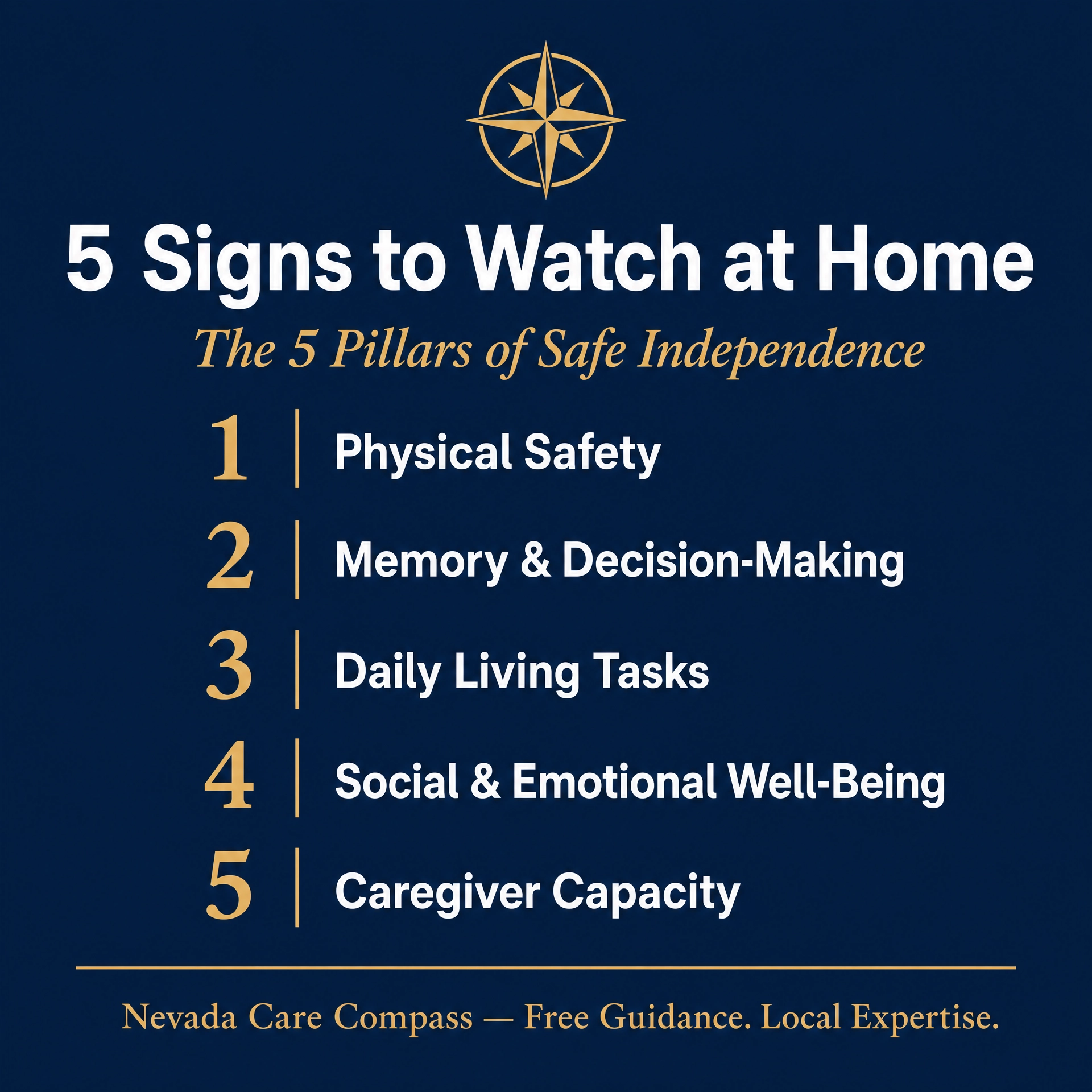
When families ask me whether their loved one can continue living safely at home, we spend a lot of time talking about the older adult.
But there is another part of the equation that is just as important: the caregiver.
Whether you are a spouse, an adult child, or a close friend, your ability to continue providing support directly affects your loved one's ability to remain safely at home. It is a difficult truth that many families don't want to admit. Sometimes the home is still working. The caregiver isn't. And that is okay.
Caregiving Happens One Small Task at a Time
Very few people wake up one morning and suddenly become a full-time caregiver. It usually begins with something simple: picking up groceries, driving to a doctor's appointment, or helping organize medications. Over time, those small favors quietly become responsibilities. Then routines. Then expectations.
Before long, you may find yourself coordinating medical appointments, managing finances, preparing meals, and responding to late-night phone calls. It happens so gradually that many people never stop to realize just how much they've taken on.
The Emotional Weight of Caregiving
Caregiving is about much more than physical tasks. It brings constant worry, sleepless nights, feelings of guilt, financial stress, and the sadness of watching someone you love change. Many caregivers feel torn between their parent's needs and the demands of their own lives—balancing careers, marriages, and children while doing everything possible to help someone they love. It is exhausting. Yet, many caregivers hesitate to ask for help because they feel they *should* be able to do it all.
Asking for Help Doesn't Mean You've Failed
One of the biggest myths about caregiving is that asking for help means you've given up. Nothing could be further from the truth. Recognizing your own limits is one of the most responsible things you can do.
When caregivers become overwhelmed, everyone is affected. Stress increases, patience decreases, and the caregiver's own health often begins to suffer. You cannot pour from an empty cup. Taking care of yourself isn't selfish; it is a vital part of taking care of your loved one.
You Have Options
Many families believe their only choices are to do everything themselves or immediately move their loved one into a senior living community. Fortunately, there are many options in between. Additional support might include a few hours of home care services each week, meal delivery, adult day programs, or respite care.
If the time does come when remaining at home is no longer the best option, you don't have to navigate the transition alone.
Nevada Care Compass helps families in Reno and Sparks understand their options, from home care resources to finding the right assisted living or memory care community. Our guidance is always free to families. If you are feeling overwhelmed, let's talk.